Technologies · 6 min read
What is vibroacoustic therapy?
Low-frequency sound you FEEL through the body, alongside music. How it works, what the research reports and how Biotune uses it.
What the research shows
Low-frequency sound felt through a mat is linked in studies to lower stress, a calmer nervous system and less pain.
The key idea
Vibroacoustic therapy delivers low-frequency sound, typically 20 to 100 Hz, through transducers in a mat, bed or chair. You hear the music and FEEL the vibration.
The study
Developed by Olav Skille and Petri Lehikoinen, vibroacoustic therapy has been studied in clinical practice, stress research and autonomic measurement, usually with sinusoidal tones around 40 Hz.
The conclusion
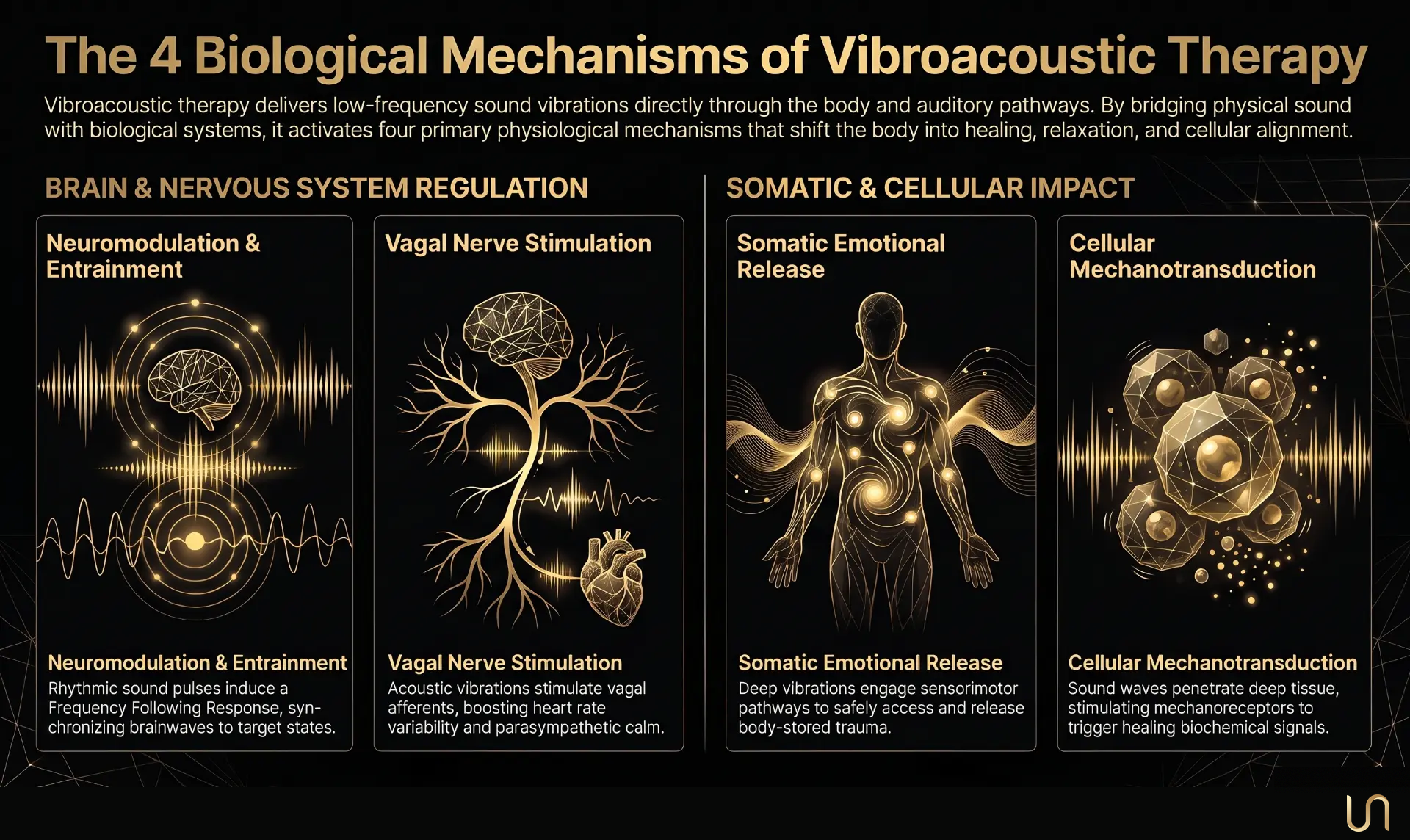
Vibration stimulates deep-tissue receptors such as Pacinian corpuscles. Researchers propose it can reduce muscle tone and quiet pain signaling through spinal gate mechanisms. Trials report lower stress, higher heart rate variability and reduced symptoms in specific groups.
What it means for you
Think of the moment a cello note hums through your chest at a concert. Vibroacoustics makes that felt layer intentional, steady and comfortable, so the body has something to settle into instead of only the ears.
How Biotune uses it
Biotune BodyWaves apply this principle: purpose-created low frequencies delivered through the SoniQ Mat and paired with music. Programs work on headphones and go deeper on a mat.
How it differs from a sound bath
A sound bath and headphone listening reach you mainly through hearing. Vibroacoustics adds a second channel: vibration delivered through contact, felt across the body as well as heard.
What a session is like
You lie on a mat, bed or chair while pulsed, low-frequency sound plays with music. Practitioners treat it as a mind-body approach, with assessment, a planned session and follow-up.
Research in juvenile arthritis
A randomized study of children with juvenile arthritis reported lower disease activity, anxiety and fatigue with vibroacoustic therapy. This study examined a specific clinical protocol, separate from Biotune programs.
Who should check first
If you are pregnant, have a pacemaker or implant, a clotting condition, epilepsy, a recent injury or surgery, or any ongoing medical condition, ask a clinician before trying contact vibration.
Illustrated · The mechanics of vibroacoustics
Common questions
Is vibroacoustic therapy the same as loud bass?
No. It uses controlled low-frequency tones, often around 40 Hz, delivered through transducers in contact with the body at comfortable levels.
Do I need a mat to use Biotune?
No. Biotune programs work on headphones. A vibroacoustic mat adds the felt BodyWaves layer.
Is it a medical treatment?
Some studies test it in clinical settings, but results are early and vary by condition. Biotune is a wellness experience and does not treat, cure or diagnose any condition.
Many studies are small and use different devices, frequencies and session lengths. Vibroacoustic therapy is not a substitute for medical care.
Read the original research